
 |
| Nuclear Magnetic Resonance (NMR)
spectroscopy is a powerful technique for the analysis of molecular structure and function. Its
familar application in the public domain, Magnetic Resonance Imaging (MRI),
is widely used in macroscopic tissue and organ imaging for disease diagnosis or functional studies. The NMR Facility at the Department of Chemistry and
Biochemistry is home to five high-resolution, solution-state NMR
spectrometers, including two at 400 MHz, two at 500 MHz, and one at 600 MHz fields of equivalent 1H frequencies.
Among them are two new state-of-the-art Bruker spectrometers recently acquired with funding support from NSF.
The Bruker Avance NEO 500 MHz spectrometer is equipped with a liquid nitrogen cooled cryoprobe (ProdigyTM) that
offers enhanced sensitivity across all nuclei of interest.
Each new spectrometer came with a 24-slot, user-height automatic
sample lift along with automatic tuning, locking and shimming capabilities.
All spectrometers are conveniently housed in two connected rooms in Physical Science Building North (PSBN). They are dedicated to a wide range of organic and inorganic small molecule and polymer research programs including those in the areas of green and sustainable chemistry, clean and renewable energy, polymer and materials research, synthesis of new drug leads and bioactive natural products, and inorganic & organometallic chemistry. The 600 MHz spectrometer is also being used for biomolecular NMR research. A Bruker 800 MHz spectrometer, currently managed by Materials Research Laboratory (MRL), is used mostly for challenging solid-state NMR, but is accessible occasionally for solution NMR, especially for proteins. Other related and complimentary capabilities on campus include several instruments for solid-state NMR, EPR and dynamic nuclear polarization (DNP). These state-of-the-art, broadly shared instruments are the results of decades of infrastructure and staff support from the Chemistry Department and the university. They reflect the outstanding education, training and research programs conducted at UCSB. With funding support from the Office of Research, the instruments were acquired with instrumentation awards from National Science Foundation through Major Research Instrumentation Program (MRI) and National Institutes of Health through Shared Instrumentation Grant (SIG, S10) and High-End Instrumentation (HEI) Grant Program. All instruments are user operated with readily available staff assistance. They are open to all campus researchers following training. The facility also provides resources and support to graduate and undergraduate education, campus-wide outreach programs and regional commercial interests in their R&D efforts. To help improve the access and operation of these NMR instruments and to continue to acquire the latest cutting-edge instrumentation to meet your analytical needs, we always welcome your input and support. | ||||
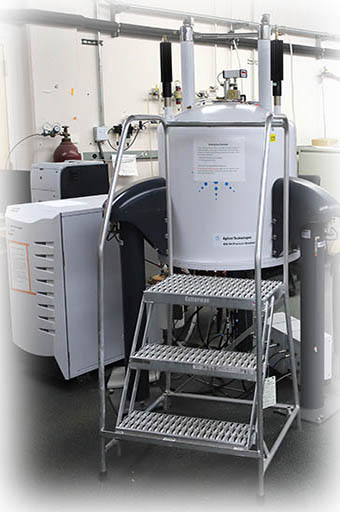 Varian 400 MHz |
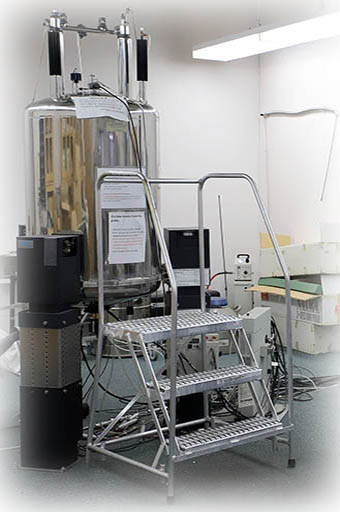 Varian 500 MHz |
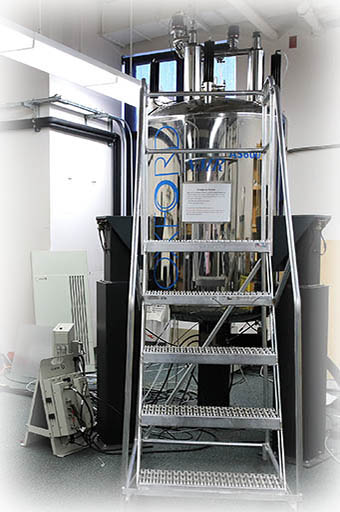 Varian 600 MHz |
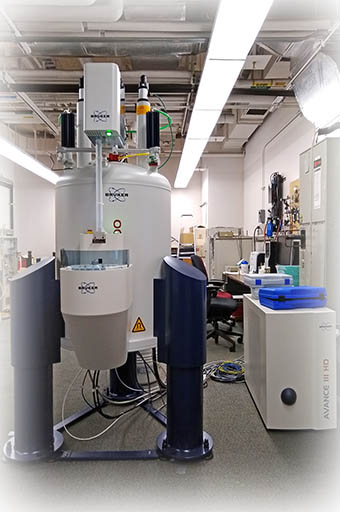 Bruker 400 MHz |
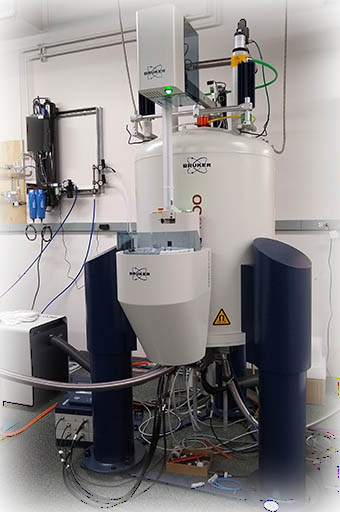 Bruker 500 MHz |
|
For questions or comments, please contact Dr. Hongjun Zhou
©2021 The Regents of the University of California. All Rights Reserved. UCSB, Santa Barbara, CA 93106
| ||||